


a mobile lab company

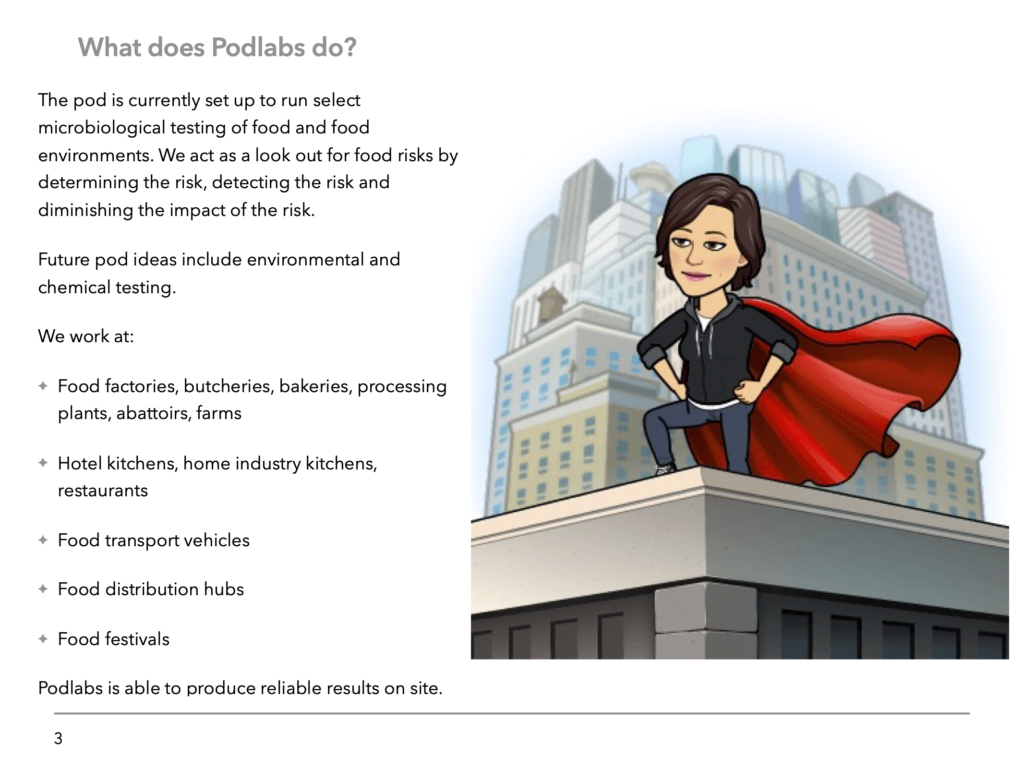
Laboratory testing is an important process, which relies on scientific analysis to identify problems with food products. It provides analytical data on the quality of a product or production process to support quality control in the HACCP system.
In the food industry, it is widely accepted that a quality management system is a tool to support business survival and growth in the long term.
Hazard Analysis and Critical Control Point (HACCP) is a preventive system designed to ensure that all food safety production is operated according to the Codex Alimentarius International Food Standards. The objective of the HACCP system is to prove that products are properly manufactured for the health and safety of consumers by avoiding three hazard sources:
• Biological hazards: Derived from microbial hazards such as salmonella and E. coli bacteria.
• Chemical hazards: Contamination with chemicals used in agriculture and the production processes of raw materials such as antibiotics, plant growth substances and pesticides, as well as food additives such as preservatives, and including chemicals that are used in the production/processing plant such as oil, grease and cleaning agents for equipment and machinery.
. Physical hazards: Foreign objects in food that can cause illness or injury to the consumer such as glass, pieces of metal, plastic or wood.
The application of a HACCP system is based on technical and scientific principles used to evaluate hazards and collect data for analysis. With this information, a plan can be devised to avoid problems and to monitor and solve problems that do occur, while continuously verifying the performance of the system.
Laboratory testing is an important process, which relies on scientific analysis to identify problems with food products. It provides analytical data on the quality of a product or production process to support quality control in the HACCP system. The objective of quality control is to identify contaminants in raw material, or contamination after a product is produced and before it is placed on the market. Additionally, laboratory testing is important for the research and development of new products, including, for example, the choice of ingredients or components, the design of food processing, shelf-life studies and sensory evaluation of products. This is the kind of information food scientists need when developing new products. Another benefit of laboratory testing is compliance with regulations for both the import and export of food products to different countries.
The laboratory used should be accredited under a standard such as the ISO/IEC 17025 standard. ISO/IEC 17025 is the general requirement for the competence of testing and calibration laboratories. A competent laboratory will use ISO/IEC 17025 to implement a quality system to improve and maintain its ability to produce consistently accurate and reliable results.
The two main sections in ISO/IEC 17025 are management and technical requirements. They are intended to ensure efficiency and technical competency in all calibration and testing.
The management requirements are primarily related to the operation and effectiveness of the laboratory’s quality management system. They cover a broad scope of topics, such as:
• The organization and management structure of the laboratory
• Document control
• Standardization of test methods to ensure consistency
• The selection and purchasing of services and supplies
• Customer feedback mechanisms
The technical requirements cover factors that determine the accuracy and reliability of the tests and calibrations. These factors include:
• Staff competence
• Methodology and procedures
• Test and calibration equipment
. Quality control program
Additionally, laboratories should be accredited for the specific methods that they conduct in their labs. For example, a food laboratory may be accredited for pesticide residues testing in fruits and vegetables but not for milk or animal tissue. Therefore, the food producer should ensure that the lab selected has accreditation for the specific method needed.
ISO/IEC 17025 is a system of quality management that covers personnel, tools or equipment, the environment and internal management systems. It is intended to check all processes and ensure accurate, reliable and consistent testing. Therefore, the laboratory should be operating this system independently, which is important in supplying unbiased information for the food industry. This information should help in responding to market demands as well as the needs of consumers, while increasing food safety and promoting healthy products.
This article is an adaptation from “The importance of laboratory testing for food production”, May 27th 2015, manufacturing.net, accessed via the website on August 17th 2020